
Drone in the sky – threat or just another working day?
27 Jun
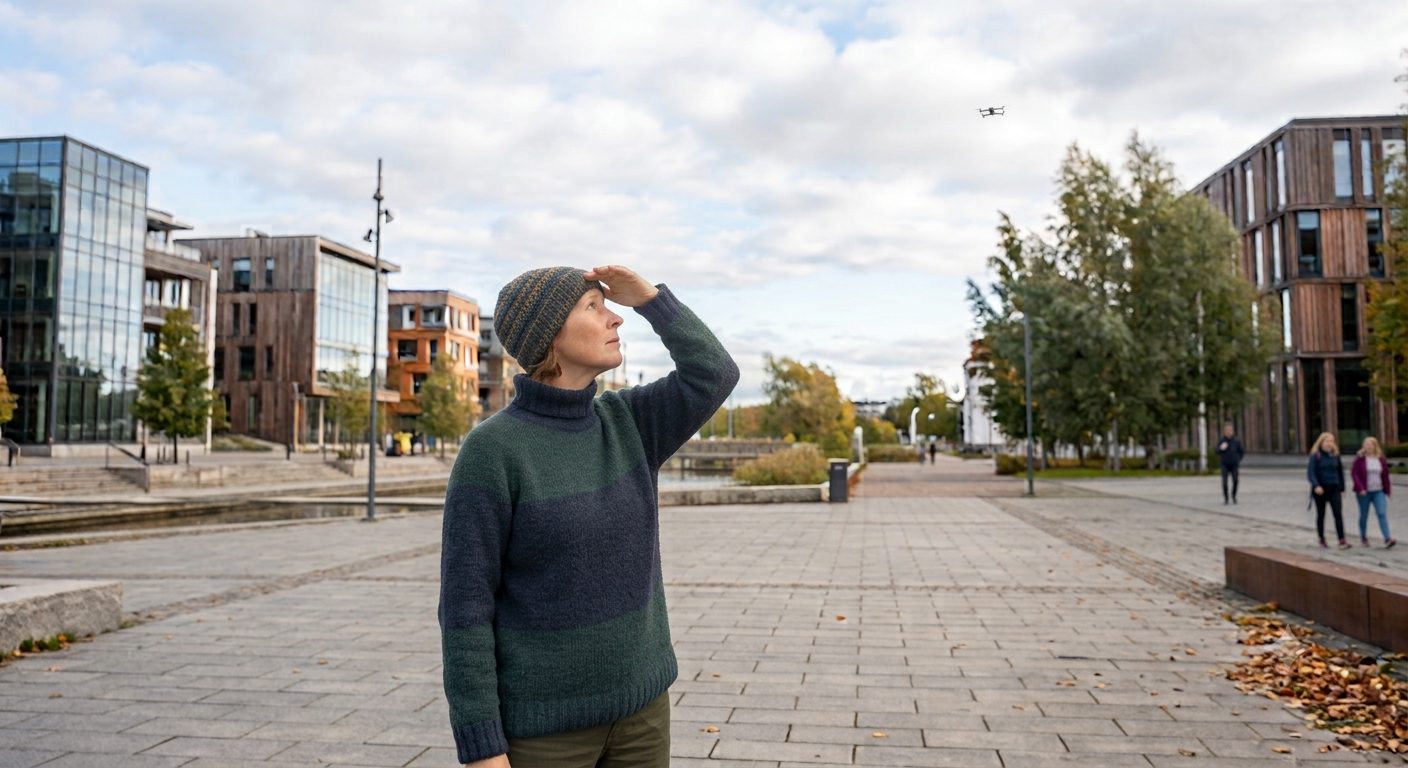
Finnish rescue services are now urging the public to report drones as a potential security threat. The intention is understandable. But the guidance is aimed at people who cannot distinguish what they are actually seeing in the sky – and that can have unintended consequences for those operating drones legally.
Finnish Rescue Services has published a page on drone threats and advises citizens to report drones that appear suspicious. Given the current geopolitical climate, the intention is reasonable. The problem is that the guidance is directed at people who, in most cases, simply lack the means to assess what they are actually looking at.
What are you actually seeing up there?
A drone flying at 100 metres looks roughly the same whether it is a €300 consumer model or a professional mapping platform worth tens of thousands of euros. From the ground, you see a small dark shape, perhaps with blinking position lights. You cannot determine the purpose, the owner or the mission.
And when it comes to actual military or hostile drones: they are unlikely to have attention-drawing blinking lights. A drone with visible position lights flying openly in broad daylight is, with high probability, exactly what it looks like – a civilian vehicle on a planned mission.
Most drones you see in everyday life have a perfectly legal explanation:
Mapping and photogrammetry: construction companies, municipalities and infrastructure firms regularly commission drone services for site documentation, volume calculations and terrain modelling.
Telecom mast and wind turbine inspections: climbing an 80-metre mast or a wind turbine nacelle is dangerous and time-consuming. A drone does the same job in a fraction of the time with no personnel risk.
Road, bridge and power line inspections: long infrastructure corridors are efficiently inspected from the air, often in places where a passer-by might find the drone activity puzzling.
Photography and documentation: properties, events and construction projects are routinely documented from the air.
Hobby flying: thousands of registered hobby pilots in Finland have exactly the same right to fly undisturbed as professional operators. They too follow the rules and are registered with Traficom.
If you see a pilot – do not interrupt
If you see someone nearby who is clearly operating the drone – holding a remote controller, looking upwards or tracking the aircraft with their eyes – do not interrupt during the flight. The pilot needs full concentration to maintain situational awareness. Interrupting mid-mission can in the worst case lead to an incident.
If you are curious or concerned, wait until the drone lands. That usually happens within 20–50 minutes, when the battery needs changing. Then ask politely. A professional pilot can always account for their mission, their authorisation and their registration.
The regulations exist – and they work
Finland follows the EU common drone regulation (EU 2019/947), administered by Traficom. The framework is detailed and places clear requirements on pilots:
Operator registration in the Traficom UAS registry
Theory examination for A1/A3 or A2 category
Mandatory electronic identification (Remote ID) for most drones
Clear restrictions around airports, populated areas and protected sites
Insurance requirements and competency requirements
A professional pilot on a mission at an industrial site outside Jakobstad has already coordinated with any relevant authorities, checked the airspace and is flying with an active registered Remote ID. That is not a threat – that is a working day.
Before you call – check Flyk and Fintraffic Sky
There is a simple and practical tip for anyone who sees a drone and wonders whether it has permission to be there: check the open digital services Flyk and Fintraffic Sky before contacting the authorities.
Flyk (flyk.com) was one of the first services in Finland to bring drone notifications and restricted zones together on a shared map. You can see active flights in real time as well as areas that are prohibited or require a permit.
Fintraffic Sky (sky.fintraffic.fi) is Fintraffic's official flight notification platform, launched in May 2025. Fintraffic is responsible for Finland's air navigation services and is a state-owned entity – professional operators primarily submit their flight notifications there. The service shows airspace restrictions in real time and is open to anyone without login.
Notifying a flight is currently voluntary in uncontrolled airspace, but strongly recommended – and it is what responsible operators do. At Droneca, we always notify our flights, including on personal time. Everyone benefits:
Other drone pilots can see what is in the air and avoid dangerous situations
Authorities and air navigation services get an accurate picture of low-altitude activity
Members of the public can check whether the drone they see has actually been notified
It would actually be reasonable to require all drone operators to notify their flights in Sky. That would make things far clearer: if a drone is visible in an area and no notification exists – that is a more concrete reason for suspicion than a vague feeling that something looks odd. Right now the picture is unclear precisely because notification is voluntary.
The problem with the "report everything" mentality
When authorities urge the public to report drones they find suspicious without providing concrete criteria for what actually constitutes suspicious behaviour, a couple of practical problems arise.
False alarms burden the system. Every report concerning a registered, legal pilot on a routine mission takes time and resources away from cases that genuinely need attention.
Working conditions deteriorate. A pilot focused on a mast inspection or mapping a road construction site can suddenly find themselves confronted by concerned bystanders or emergency services – despite everything being in order and notified in advance.
What would actually be more helpful?
Rather than urging the public to report drones in general, it would be more constructive if authorities communicated concrete indicators of genuinely suspicious behaviour:
Night flying without lights – registered drones must have position lights for night operations; most modern professional models have them active during daytime as well
A drone with no Remote ID signal – since 2024, Remote ID requirements apply broadly across the EU; a drone broadcasting no identification signal is itself noteworthy
No notification in Fintraffic Sky or Flyk – combined with other factors, a relevant observation
Aggressive or provocative behaviour – a clearer and more bounded criterion than "suspicious"
The most common scenario is VLOS (Visual Line of Sight), meaning the pilot keeps the drone within visual range – often 250–300 metres, depending on the drone's size, shape, weather conditions and so on. In that case, a responsible pilot will be present and identifiable. There are also legal BVLOS operations (Beyond Visual Line of Sight) conducted under a special authorisation from Traficom, where the pilot may be out of visual range – so the absence of a visible pilot is not automatically a warning sign.
And as a first step for the curious: open Flyk or Fintraffic Sky and check whether there is an active notification for the area you are looking towards. It takes thirty seconds and gives a far better basis for judgement than a gut feeling.
The drone industry does not need to be demonised
Finland has a well-regulated and professional drone landscape. Hundreds of missions are carried out every year by registered operators, municipalities, energy companies, construction firms and certified pilots – professionals and hobbyists alike – all within the applicable regulations and in full transparency towards Traficom and Fintraffic.
Security awareness in society is welcome. But it needs to be combined with education, not just alerts. Otherwise we risk creating an environment where lawful professionals and peaceful hobby pilots are treated as presumptive threats – an unsustainable situation for an industry that delivers real value to society's infrastructure, construction sector and industry.
About Droneca
Droneca offers professional drone mapping and inspection services in Ostrobothnia and across Finland. We fly with certified pilots, registered with Traficom, with active Remote ID and the necessary authorisations for every mission. All our flights – including personal ones – are notified in Fintraffic Sky. Our services include mapping, orthophoto production, volume calculations, 3D modelling, mast inspections, wind turbine inspections and infrastructure inspections for construction and energy projects.
Do you have questions about how drones are used professionally, what regulations apply or how we can help your organisation? Contact us at droneca.fi.
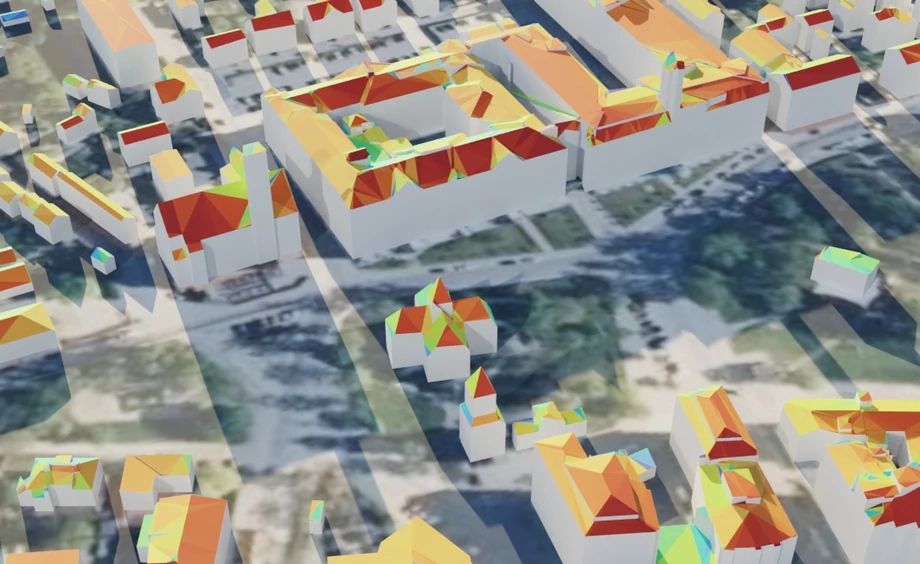
Jakobstad in 3D: the solar energy on every roof and the sun hours on every square metre
Drone in the sky – threat or just another working day?

What Buyers Need to Know About Drone Operator Certification in Finland
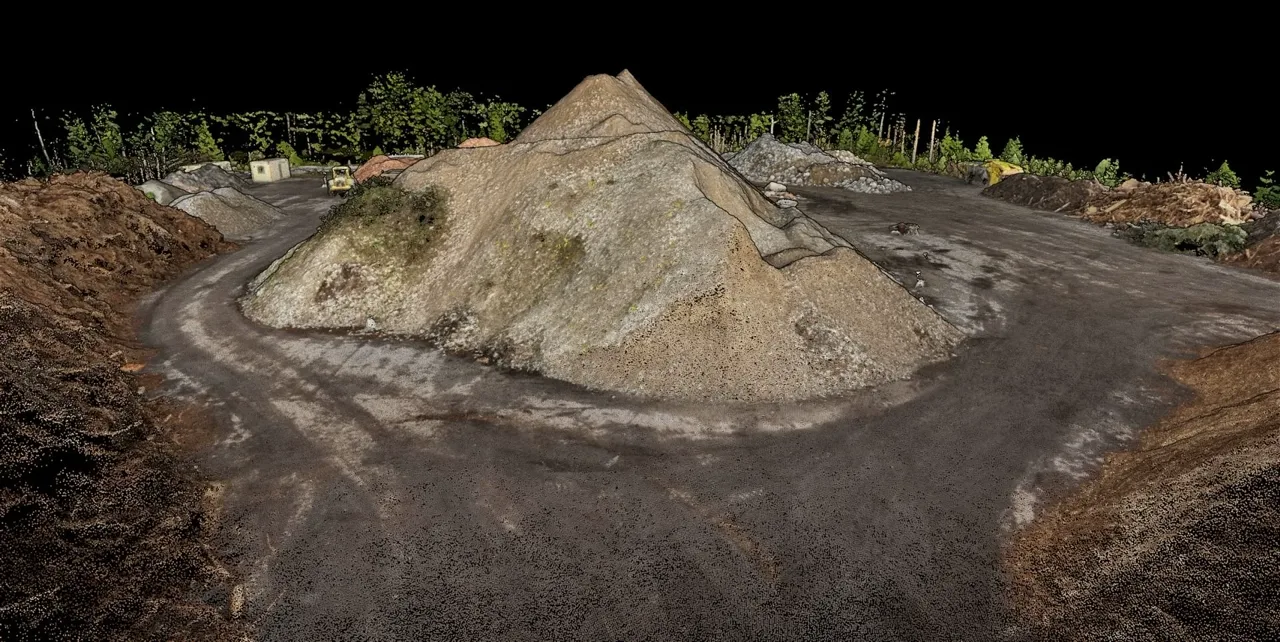
Case: Volume calculation of material piles with a drone - Over 51,000 m³ in a recycling area