
What Buyers Need to Know About Drone Operator Certification in Finland
4 May
When you hire a drone service provider for a construction site, industrial facility, or infrastructure project, your responsibility doesn't end with the purchase order. The operator's qualifications and permits directly determine whether the work can proceed, and who bears the risk if something goes wrong.
Why Does This Matter to You as a Buyer?
Demand for drone services is growing rapidly in Finland. Construction site progress monitoring, material volume calculations, roof and façade inspections, and infrastructure condition assessments are becoming everyday work for more and more companies. But the market includes service providers at very different levels of competence, from hobbyists to professionals.
As a buyer, you don't need to know aviation regulations inside out. But there are a few basics worth understanding, since they directly affect the project's safety, schedule, insurance coverage, and legal liability.
How Is Drone Flying Regulated in Finland?
EU regulation divides drone flights into three categories based on the level of risk involved. In Finland, Traficom is responsible for oversight.
The open category is intended for low-risk flights. The company registers as an operator with Traficom, and the remote pilot completes personal theory exams. An important restriction: in the open category, only the lightest drones, under 250 grams (the so-called C0 class), may fly directly above bystanders. Professional mapping and inspection drones typically weigh 1–4 kg, so they may not fly above people without special authorisation.
The specific category covers exactly these more demanding operations: flying in populated areas, above industrial facilities, near people, or beyond visual line of sight (BVLOS). The specific category includes several pathways, such as a declaration based on standard scenarios (STS) or a more extensive risk assessment, on the basis of which Traficom grants an operational authorisation. What all of these have in common is that the operator is required to have documented risk management.
The certified category is intended for the highest-risk operations and does not currently apply to typical drone services.
The practical conclusion for the buyer: if the assignment requires flying above a construction site, a port, or an industrial area, a basic open-category qualification alone is not enough. The operator needs a declaration or operational authorisation under the specific category.
What Does a Safety Assessment Mean in Practice?
The most demanding operations in the specific category require a systematic risk assessment. It is the drone industry's equivalent of what ISO standards are to manufacturing: a documented way to show that risks have been identified, assessed, and managed.
The assessment covers ten steps. Simplified, they answer three questions:
What happens if the drone falls? The assessment takes into account the drone's weight, the population density of the operating environment, and the safety systems in use. For example, a parachute system can be part of the setup: it slows the rate of descent and reduces the danger to people on the ground.
Could the drone collide with an aircraft? The assessment considers the operating altitude, the classification of the airspace, and the means by which the operator manages airspace risk, for example notifications to other air traffic and the use of observers.
Is the operator prepared for everything? The safety assessment defines up to 24 safety objectives covering the remote pilot's competency, equipment maintenance, emergency procedures, and weather limits. The more demanding the operation, the stricter the requirements.
What Should a Buyer Ask a Drone Service Provider?
Before placing an order, ask at least the following:
Is the company registered with Traficom as an operator? Every commercial drone operator must be registered. This is a basic requirement, not a competitive advantage. If the operator is not registered, the work is not legal.
Under what authorisations does the operator work, and what qualifications do the remote pilots hold? Open-category qualifications are sufficient for simple imaging in sparsely populated areas. But if the assignment requires flying on a construction site, near an industrial facility, or in an urban area, the operator should hold an authorisation under the specific category, and the remote pilots' qualifications should be appropriate for the task.
Does the operator have liability insurance? EU regulation requires liability insurance. Ask about the insurance's coverage and validity. A professional operator will present these without being asked.
Does the operator have a documented operations manual? A professional operator has documented normal operating procedures, emergency procedures, a maintenance schedule, weather limits, and personnel qualification requirements. This is not a mere formality — it shows that the operator works systematically.
How does the operator handle emergencies? A professional operator has a written emergency response plan covering typical disruption scenarios: loss of link, uncontrolled descent, and encountering a manned aircraft. The existence of such a plan shows that the situations no one wants to happen have also been thought through.
How is the drone equipped from a safety standpoint? In demanding operations, the equipment may include, for example, a parachute system that slows the rate of descent and reduces the danger to people on the ground. In addition, professional equipment continuously broadcasts identification data into the airspace (Remote ID), making the drone visible to authorities and other air traffic.
Why Do Qualifications Directly Affect Your Project?
Compliance with regulations isn't only the operator's concern. As a buyer, you have concrete interests at stake:
Insurance coverage. If the flight is carried out without the proper authorisations and an incident occurs, the insurance company may deny the claim. This applies both to the operator's own insurance and to the insurance coverage of your own site.
Legal liability. A buyer can be held liable if they have hired an operator whose activities are not lawful. This risk is real, particularly in safety-critical environments such as industrial facilities or ports.
The project schedule. An operator without the necessary authorisations cannot fly in populated areas, controlled airspace, or beyond visual line of sight. In the worst case, the work has to be done using traditional methods, such as from scaffolding or manual measurement, which costs more and takes longer.
Occupational safety. A professional drone operator reduces risks rather than adding to them. A roof inspection by drone removes the need for climbing and scaffolding. But this depends on the operator being able to assess the safety of the surroundings and handle unexpected situations.
Hallmarks of a Professional Operator
When evaluating a drone service provider, pay attention to the following:
Traficom registration and valid liability insurance — basic requirements that should not be compromised on.
A documented safety process — an operations manual, checklists, and an emergency response plan show systematic working methods.
Qualifications appropriate to the task — an operational authorisation under the specific category or an STS declaration for demanding sites, and the remote pilots' personal certificates in order.
Professional equipment with safety features — a parachute system, precision positioning, and Remote ID are part of professional operation, not extras.
Droneca Oy, a Professional Drone Service Partner
Droneca Oy is a drone services company based in Pietarsaari, serving construction, industrial, and infrastructure companies throughout Finland. Our operations are built on over 16 years of experience in the geospatial industry and on qualifications compliant with EU regulation.
We have invested in safety and documentation to a level that withstands professional scrutiny: a comprehensive safety assessment, a documented operations manual with seven checklists, professional equipment fitted with a parachute system, and liability insurance of one million euros.
Our goal isn't to sell individual flight assignments. We want to be a partner that solves recurring operational challenges, whether that means construction site monitoring, volume calculations, or infrastructure inspections.
Want to know more? Contact us and let's discuss how drone services can support your project.
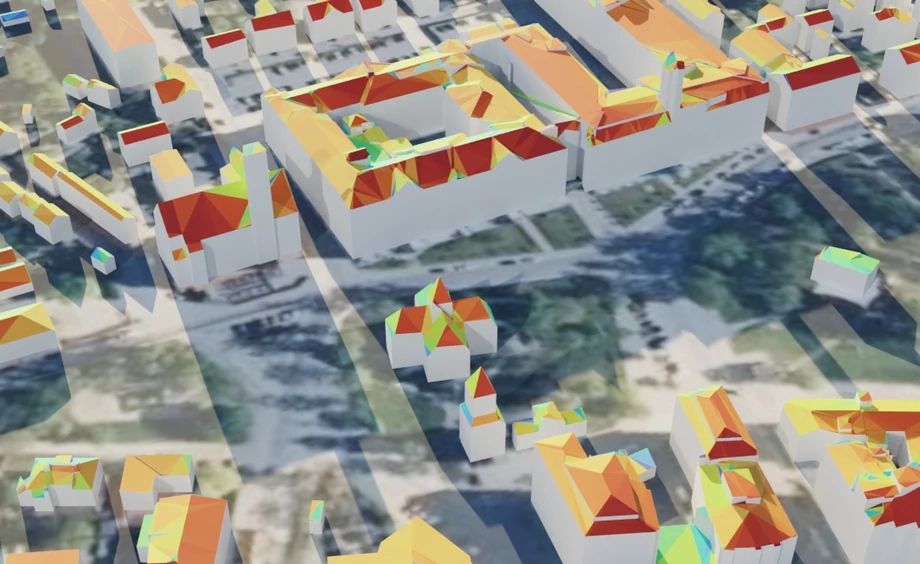
Jakobstad in 3D: the solar energy on every roof and the sun hours on every square metre

Drone in the sky – threat or just another working day?
What Buyers Need to Know About Drone Operator Certification in Finland
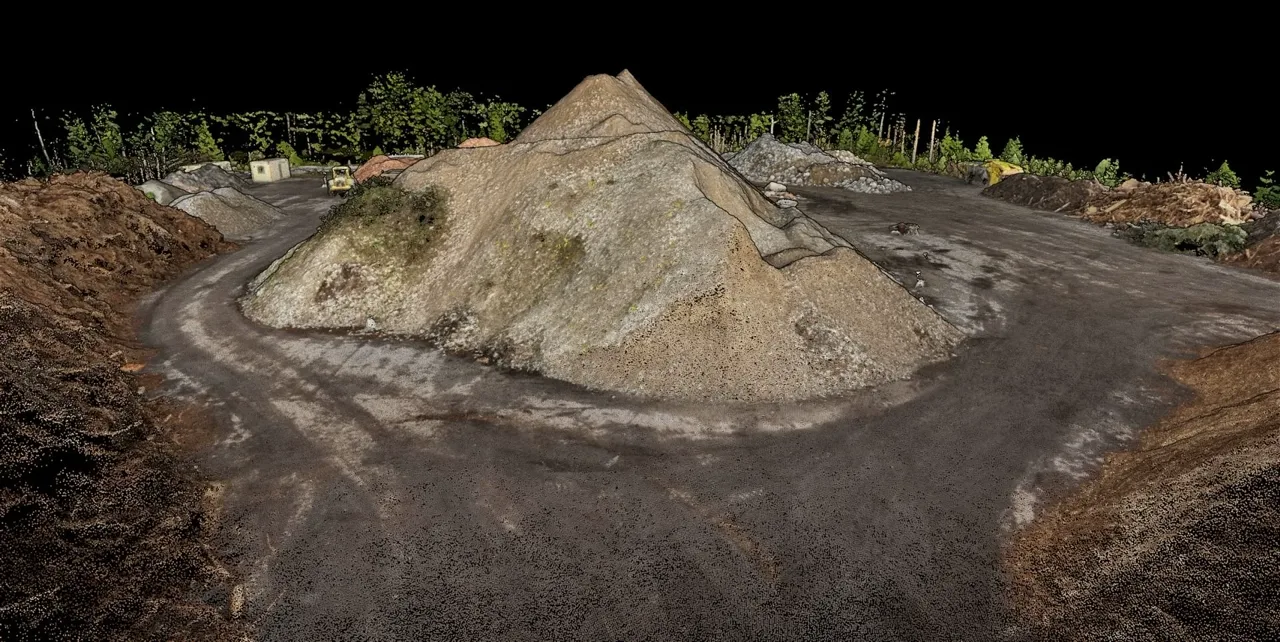
Case: Volume calculation of material piles with a drone - Over 51,000 m³ in a recycling area